Most business do not fail at networking since of a single bad switch or a flaky fiber run. They have a hard time since the lifecycle isn't managed as a continuum. Planning is separated from procurement, procurement is divorced from deployment, and nobody owns optimization after the first effective ping. The outcome is a network that costs more than it should, ages badly, and withstands change when the business requires to move.
Treat the lifecycle as one linked practice. Construct a strategy that anticipates growth and risk, procure with interoperability and supply assurance in mind, deploy with observability baked in, and optimize like it's a living system. The method repays in resilience, lower total expense of ownership, and less weekend outages.
The architecture conversation you require before any purchase order
Capacity and redundancy are the simple parts to design. What gets missed out on are the limit conditions. A retail brand name creating for vacation peaks may target 4x typical throughput, only to see a surprise 7x burst when a marketing tie-in goes viral. A healthcare facility might plan for dual information centers and forget that a community construction task can get both last-mile fiber routes. Get opinionated about failure domains and observable choke points. That viewpoint will drive hardware choices more than any datasheet.
Think in layers that map to obligation. Core and spine need deterministic latency and a conservative modification cadence. Distribution and leaf can move faster, however they need to expose quality telemetry. Edge requires to be modular and tolerant of product optics and cables because that's where the greatest churn lives. Write these expectations down. They end up being the guardrails for standardizing on line cards, optics, and even a preferred fiber optic cable televisions supplier.
Model growth with varieties, not single numbers. If your east region grows 15 to 25 percent annually, strategy port density, uplink capacity, and optics inventory for the upper bound, and decide what triggers scale-out. If your cloud egress varies due to the fact that of a data gravity task, simulate the effect on your school core. Good strategies don't anticipate perfectly; they provide quickly, safe methods to adjust.
The role of standards and interoperability
Standards compliance is table stakes, but multi-vendor interoperability is where real cost savings appear. Numerous business now blend OEM and compatible optical transceivers. The compatibility game is part engineering, part supply chain. Engineering matters due to the fact that firmware, DOM direct exposure, and vendor locking can create corner cases. Supply chain matters due to the fact that when a DWDM wave goes down at 3 a.m., the extra that gets here in 2 hours need to in fact work.
I keep a list of tests for optics suppliers. Initially, consistent DOM reporting across suppliers. If temperature level and TX power drift from expected ranges or format inconsistently, keeping track of limits develop into sound. Second, EEPROM coding habits with open network switches and with OEM gear in stringent mode. Third, RMA responsiveness at scale. A supplier that reverses replacements in days instead of weeks changes how many spares you require to stage.
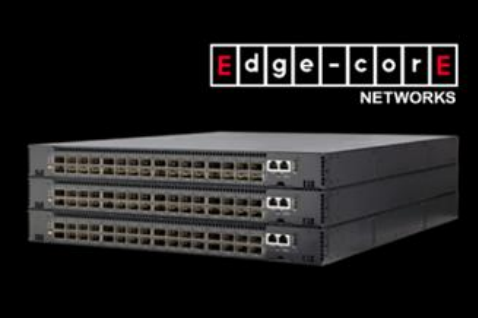
Open network changes be worthy of the exact same rigor. They shine in environments where you want Linux-like control over changing behavior and where you have the DevOps discipline to handle NOS images and automation pipelines. They likewise have sharp edges: subtle distinctions in Broadcom SDK behavior across generations, port group quirks, and chauffeur interactions with optics. When open switches are picked purposefully and checked thoroughly, they deliver flexibility and price-performance that standard stacks battle to match.
Procurement as a dependability function
Procurement frequently enhances for unit cost and misses out on lifecycle expense. The most inexpensive 100G SR4 optic looks fantastic until you have actually burned a hundred hours chasing after a micro-compatibility problem on a single switch family. The reverse is likewise real: you can pay too much for OEM-only comfort where suitable optical transceivers would have worked flawlessly.
I have actually seen the very best outcomes when procurement groups bring shared metrics with operations. Mean time to fix, RMA rate by SKU and supplier, firmware alignment effort by platform, and lead time volatility all make it into the vendor scorecard. As soon as determined, your choices clarify. That "expensive" provider that never ever misses out on an RMA run-down neighborhood might let you cut sparing by 30 percent. A fiber plant partner with foreseeable shipment windows reduces the temptation to hoard stock, which releases capital.
Telecom and data‑com connectivity contracts are another location where lifecycle beats spot offers. Lock in varied paths from physically diverse suppliers, then request route maps and construction moratorium windows up front. If a carrier can not show fiber path diversity beyond marketing language, presume it does not exist. Tie service credits to determined mean time to fix, not simply accessibility, and insist on separation presence. When procurement writes these into the contract, operations stop discovering surprises throughout incidents.
Designing for repairability
A network that stops working gracefully is good. A network that is simple to repair is much better. That changes what you wholesale fiber optic cables purchase and how you rack it.
Hot-swap everything you can. Document the service loops and power whip lengths so a field tech can change a power supply without troubling neighboring gear. Standardize on transceiver and cabling SKUs across areas to avoid orphan spares. If you need to mix vendors, make the port assignments predictable so website hands can follow a visual guide.
Pay attention to the physical layer. Fiber management desires discipline. Any good fiber optic cable televisions provider can offer you LC to LC jumpers; the excellent ones will ship serialized, color-coded, bend-insensitive assemblies with test reports you can ingest into your CMDB. That looks like a luxury up until you require to trace a light loss problem throughout a 144‑strand harness at midnight.
The case for open optics and whitebox
There are strong factors to accept open communities. Cost per bit is engaging, yes, but the genuine benefit is control. When you decouple hardware from software and optics from brand locks, you can switch parts based upon preparations, not simply logo designs. Throughout the 2020-- 2022 supply snarls, teams that had validated compatible optical transceivers and several switch OEMs kept projects on track while others slipped quarters.
This freedom needs engineering maturity. Compose a golden test strategy that covers link bring-up, auto-negotiation peculiarities, FEC settings, DOM peace of mind checks, and error counters under heat. Test 25G to 100G breakouts and oddball combinations like multi-rate 400G ports running 4x100G with different optics suppliers. Capture failure signatures. As soon as you trust your recognition, you can purchase based upon availability and price while keeping constant habits in production.
Open network switches complement this world. You can pin to a NOS version you've verified, deploy BGP EVPN regularly throughout suppliers, and develop automation that treats platforms as cattle, not animals. The trap is partial adoption. Mixing whitebox and closed-box in the very same pod without a clear border creates functional friction. Draw tidy lines: leafs open, spines closed is a typical compromise that protects determinism in the core while keeping expenses in check at the edge.
Inventory: the peaceful source of downtime
Networks go dark because a single $80 optic is missing out on from the extra package or because a cable television map is incorrect. Stock hygiene is unglamorous but deadly when disregarded. Keep a real-time view of spares by website, connected to failure rates and supplier RMA pipelines. If a specific 10G BiDi shows a 3 percent early failure rate, pre-stage more where labor is expensive, and lean on your supplier for root cause and binning.
Automatic reconciliation assists. When a specialist scans a transceiver or cable television QR code into the ticket, that serial should roll off the website spare count. When RMA stock returns, it needs to increment. Basic, yes, but I've viewed this fall apart in the last mile in between an ERP and a rack. The repair is cultural and procedural: need a serial scan at the demarc cabinet or ToR, not in the filling bay, and audit monthly.
Observability as a superior requirement
If you can't determine it, you can't defend it. Select hardware for the quality of its telemetry as much as raw throughput. Platforms that expose exact queue depth, buffer tenancy, per-NPU temperatures, and optics DOM information conserve days of uncertainty. Ensure the NOS supports streaming telemetry at scale which your collectors can handle spikes without sampling away the information you'll require throughout a microburst.
Line cards and changes that hide counters behind exclusive MIBs slow automation. When you can, standardize on designs with open, well-documented APIs. If you need to purchase a platform with nontransparent telemetry, capture that cost in your lifecycle design. It will appear later as engineering hours constructing bespoke exporters or throughout incidents where you can't see the truth.
I keep one guideline throughout deployment: do not show up a link that isn't being monitored end to end. That suggests user interface counters, optics health, routing adjacency state, and packet loss or latency from an artificial probe. If you light it without presence, you will forget to wire it into observability later on, and after that you'll chase ghosts.
Capacity planning that reacts to reality
Static limits age inadequately. Tie capability triggers to company signals. If an item team releases a function that doubles east‑west traffic, your planning should record that within a week, not a quarter. Pull data from traffic matrices, flow logs, and route analytics to spot asymmetry. It prevails to find a link pegged at 70 percent usage with microbursts pressing buffers to the edge, while the redundant path sits at 20 percent since of hashing traits or policy constraints.
Padding is less expensive than rework. For spinal column bandwidth, target a steady-state ceiling of 40 to half to leave space for maintenance events and microbursts. For leaf uplinks, consider dual-rate optics that can step from 100G to 200G without a plant change when the time comes. For power and cooling, design for the next generation of line cards, not the present one. Few things burn time like finding your panel can't feed the future.
Security and lifecycle hardening
Security seldom stops working since of a missing out on function; it fails in the joints. Patch cadence, credential hygiene, and supply chain trust drive most outcomes. Bake quarterly upkeep windows into the strategy where you upgrade NOS images, change bootloaders, and optics firmware in one sweep. Automate prechecks and postchecks so the window can handle real work, not human fumbling.
Build an allowlist for optics and cable televisions much like you do for software libraries. Suitable optical transceivers are exceptional value when vetted. Without vetting, they end up being a cottage market of subtle incompatibilities. Need suppliers to provide signed firmware provenance and a public secret you can verify. For critical links, especially in managed environments, demand chain-of-custody documents for telecom and data‑com connectivity components. You will not ask for it typically, however when auditors appear, you'll be happy it exists.
Zero trust principles belong in the network management aircraft as much as user gain access to. Console servers, out‑of‑band switches, and management VRFs are worthy of per‑device credentials, MFA where practical, and strict division. A breach through a forgotten console port harms even worse than a user VLAN compromise.
When and how to refresh
Refresh cycles are more art than science. Vendors want 3 to five years; finance wants seven or longer. Let efficiency and risk decide. If a platform stops receiving security spots, it's on obtained time. If optics for a given speed grade double in cost since the marketplace moved on, consider a step up where you can buy inexpensive 100G for 4x25G breakouts or 400G for 4x100G splits.
Phased refresh is kinder to operations. Change line cards or leafs in waves and keep a combined environment under control with software application feature parity. In EVPN materials, for instance, keep control plane features consistent throughout generations and isolate NIC driver experiments in a laboratory unless you like chasing ghosts in ARP suppression.
Don't ignore power and cooling implications. Moving from 100G to 400G can double or triple the watts per rack unit. A website that looks fine on paper can tip over when 3 nearby racks refresh in the exact same quarter. Deal with centers early and stage load banks if needed to test cooling.
Vendor relationships that work under stress
A reseller who just calls when a quota is due is not a partner. The best partners make their seat with proactive insights: upcoming silicon supply restraints, optics that fail in particular running temperatures, or a new fiber cable television coat product that reduces bend loss in tight trays. They'll likewise tell you when not to buy a glossy brand-new platform because the field has actually not cleaned the bugs.
Make transparency a two-way street. Share your failure information by SKU. In return, ask for aggregated anonymized failure trends and firmware defect lists. When a provider confesses a vulnerable point and uses a mitigation strategy, trust them more, not less. If they deflect or reject regardless of your telemetry, begin grooming alternatives.
For multiprovider telecom, keep escalation paths fresh. During one metro fiber cut, the carrier's first-line group could not see the problem because their monitoring only tracked up/down and not light levels. The escalation to a local NOC with OTDR access shaved hours from the repair work. Update those contacts quarterly and check them during non-emergencies.
Field playbooks that appreciate reality
Runbooks that presume the world is quiet will fail throughout storms. Keep actions short, decisive, and tolerant of variation. When a line card dies, the tech at the site is handling sound, time pressure, and sometimes a badge that's about to expire. Clear labeling on rails, consistent slot numbering in diagrams, and images for crucial actions matter more than you think.
Train for the quirks. A 400G DR4 running warm at altitude acts in a different way than in a sea-level lab. A 10 km LR optic can pass light however still error under vibration near heavy equipment. Catch these field learnings and feed them back into standards. In time, the requirements solidify and eliminate whole classes of issues.
Sustainable economics without wonderful thinking
Networking invests are visible and tempting targets for budget plan cuts. You can control cost without gambling on dependability. Start with power. Newer silicon can provide much better efficiency per watt, and in some areas, electricity is the dominant operational cost. Model power cost savings over three years against the capital for a refresh and the numbers frequently support moving sooner.
Cabling and optics are another lever. With a disciplined recognition program, suitable optical transceivers typically cost 30 to 60 percent less than OEM. That spread out spends for test gear, extra inventory, and training with cash left over. The distinction in between single-source and multi-source fiber optic cables supplier relationships can show up throughout a project surge. A second supplier with comparable quality and predictable lead times is not redundancy; it is expense control.
Open network switches lower system costs and broaden your settlement posture. The trade is investment in automation and engineering talent. If you're not prepared for that discipline, a hybrid method keeps you sane: run open at the edge where change is frequent and fault domains are little, and keep the core on platforms where you worth deterministic support.
A short list for each lifecycle phase
- Plan: File failure domains, growth varieties, and observability requirements. Verify multi-vendor interoperability in a laboratory that mimics heat and vibration conditions. Procure: Rating vendors on RMA rate, lead time volatility, telemetry openness, and agreement transparency. Protected varied telecom and data‑com connection with verifiable course diversity. Deploy: Standardize on SKUs and labeling. Do not raise links without end-to-end monitoring. Capture serials and DOM baselines at turn-up. Operate: Stream telemetry, evaluation abnormalities weekly, and tie capacity activates to organization metrics. Keep firmware lined up and spot on a predictable cadence. Optimize: Retire high‑failure SKUs, refine requirements based on field occurrences, and review the economics quarterly as optics and power costs shift.
Where the fiber satisfies the spreadsheet
The lifecycle view forces hard options upfront and saves painful surprises later on. If you're selecting in between a slightly more expensive switch that releases abundant counters and a cheaper one with opaque telemetry, keep in mind the hours you'll spend blind throughout a packet drop crisis. If a vendor can not devote to extra parts inside your repair work window, bake that danger into the rate and demand compensation or walk.
Tie networking goals to organization results others can feel. A contact center appreciates jitter, not BGP timers. An information science team cares about foreseeable east‑west throughput to storage, not whether you chose EVPN or MLAG. Equate. When you cut mean time to fix on gain access to switches by 40 percent because your spares and playbooks are tight, tell finance what that suggests in efficiency and overtime avoided.
Finally, treat your providers and partners as part of your operating model. A trusted fiber optic cable televisions supplier who understands your labeling conventions, a go‑to source of compatible optical transceivers with strong test data, and a hardware partner comfortable with open network switches can keep your enterprise networking hardware roadmap moving when markets move against you. Relationships and rigor, more than any one innovation choice, identify whether your network flexes or breaks under pressure.
Two field stories that changed how I buy
A national retailer standardized on a single OEM's 10G optics since it appeared much safer. Throughout a logistics crunch, lead times slipped from 2 weeks to twelve. We had a confirmed 2nd source in the lab however had not included it to the allowlist. Updating the allowlist, running a quick burn-in, and retraining site hands cost two weeks. The next year, we made dual-sourcing part of the requirement and never missed a store opening date once again. The lesson was simple: recognition in the laboratory isn't a side project; it's a core capacity enabler.
At a regional bank, we deployed a modern-day spine-leaf with BGP EVPN and open network changes at the leaf. The spines were a traditional platform with outstanding telemetry. A sporadic microburst triggered line drops on one spinal column line card that only appeared under really specific traffic mixes. Because the spines exposed deep counters and the leaves streamed interface and queue stats, we triangulated the concern in under an hour and applied a vendor-recommended QoS profile change. If either side had actually been nontransparent, we would have invested days finger-pointing. That occurrence sealed my bias toward buying platforms that let you see, not guess.
The lifecycle never ever stops
Networks are not monoliths. They are factories that take in policies and packages and produce results users experience every second. Plan with humbleness, acquire with leverage and clearness, deploy with discipline, and optimize relentlessly. When the architecture respects failure domains, procurement aspects time-to-repair, and operations appreciates observability, the entire system substances in your favor.
Do these things and you will not just keep the lights on. You'll make the right to say yes when the business asks for something brand-new, whether it's a 400G analytics cluster, a new region with stringent compliance guidelines, or a merger that lands a surprise set of platforms in your lap. The lifecycle approach offers you the muscle to absorb change without drama, which is the quiet superpower of high-performing network teams.